Predicting spin-orbit coupling in hole spin qubit arrays with vision-transformer-based neural networks on a generalized Hubbard model
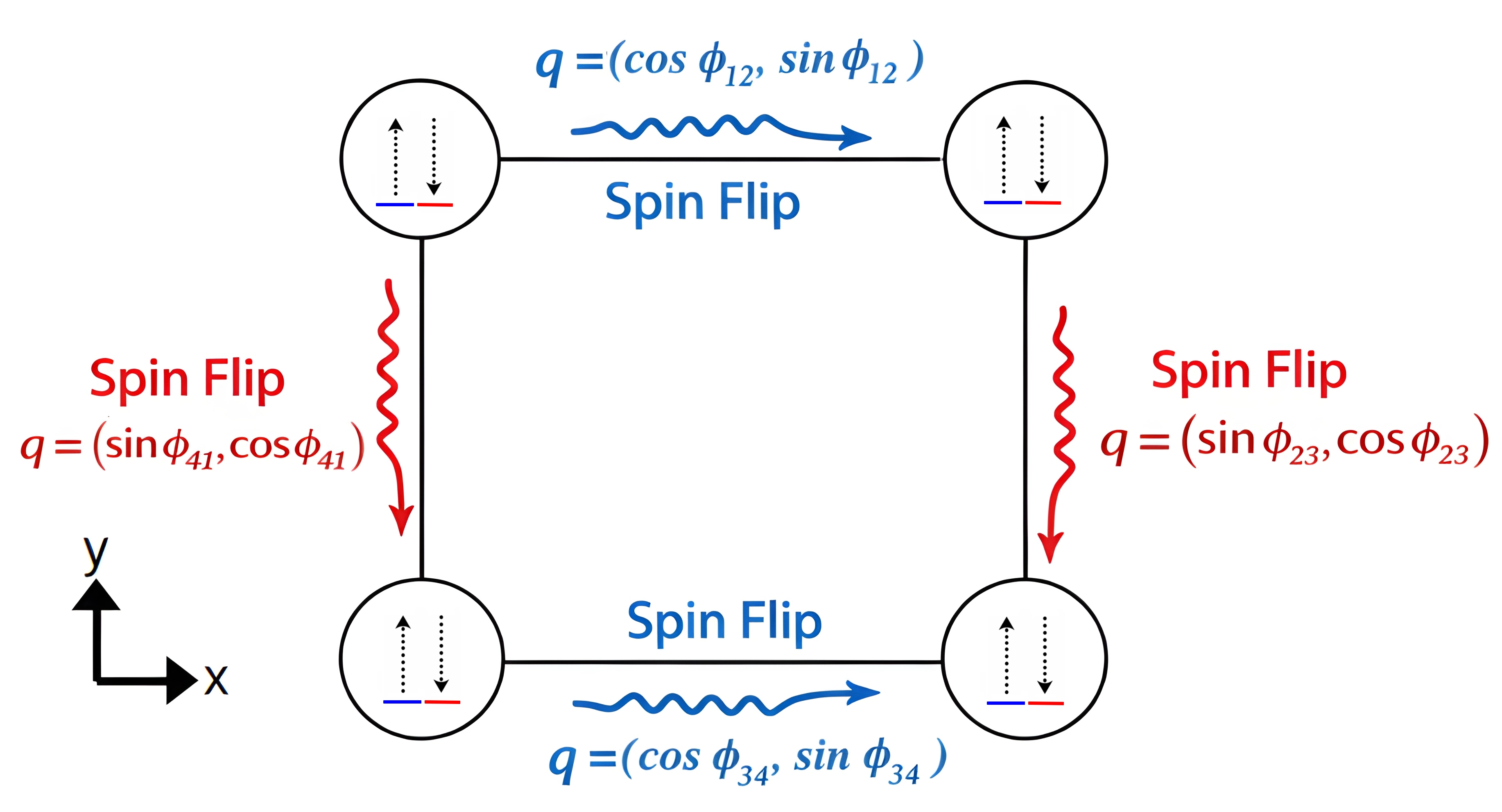
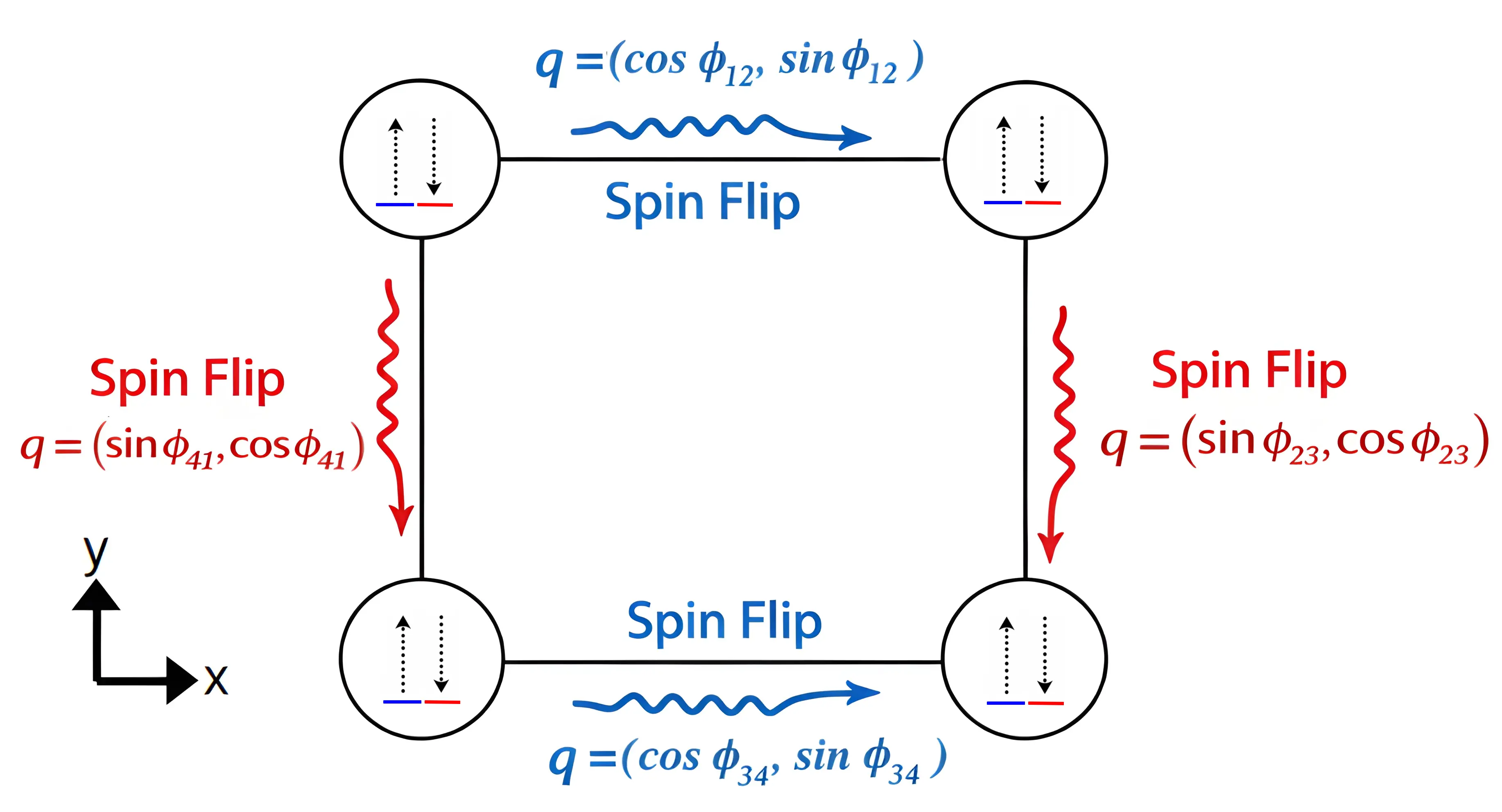
We introduce a neural-network-based machine learning method to predict the effective spin-orbit coupling (SOC) strength in hole quantum dot arrays from standard charge stability diagrams. Specifically, we study a Ge hole quantum dot array described by a generalized spin-orbit coupled Hubbard model that incorporates random site- and bond-dependent disorder in all system parameters, including onsite potentials, Coulomb interaction strengths, interdot tunneling amplitudes, as well as the direction and angle of the SOC-induced spin rotations accompanying interdot tunneling. We train the neural network on numerically simulated charge stability diagrams from nearest-neighbor pairs of quantum dots for different chemical potentials and out-of-plane magnetic fields, and show that this enables us to predict the SOC-induced spin-flip tunneling amplitudes — and, thus, the effective SOC strength — with high fidelity () even when all other Hubbard model parameters are unknown. Furthermore, our neural network can also predict the other Hubbard model parameters with high fidelity, demonstrating that neural-network-based approaches can be a powerful tool for the automated characterization of hole spin qubit arrays.
← Back to publications