Avoiding Dilution: Using Diffusion and Vision Transformers to resolve Majorana Features in Nanowires at High Temperature
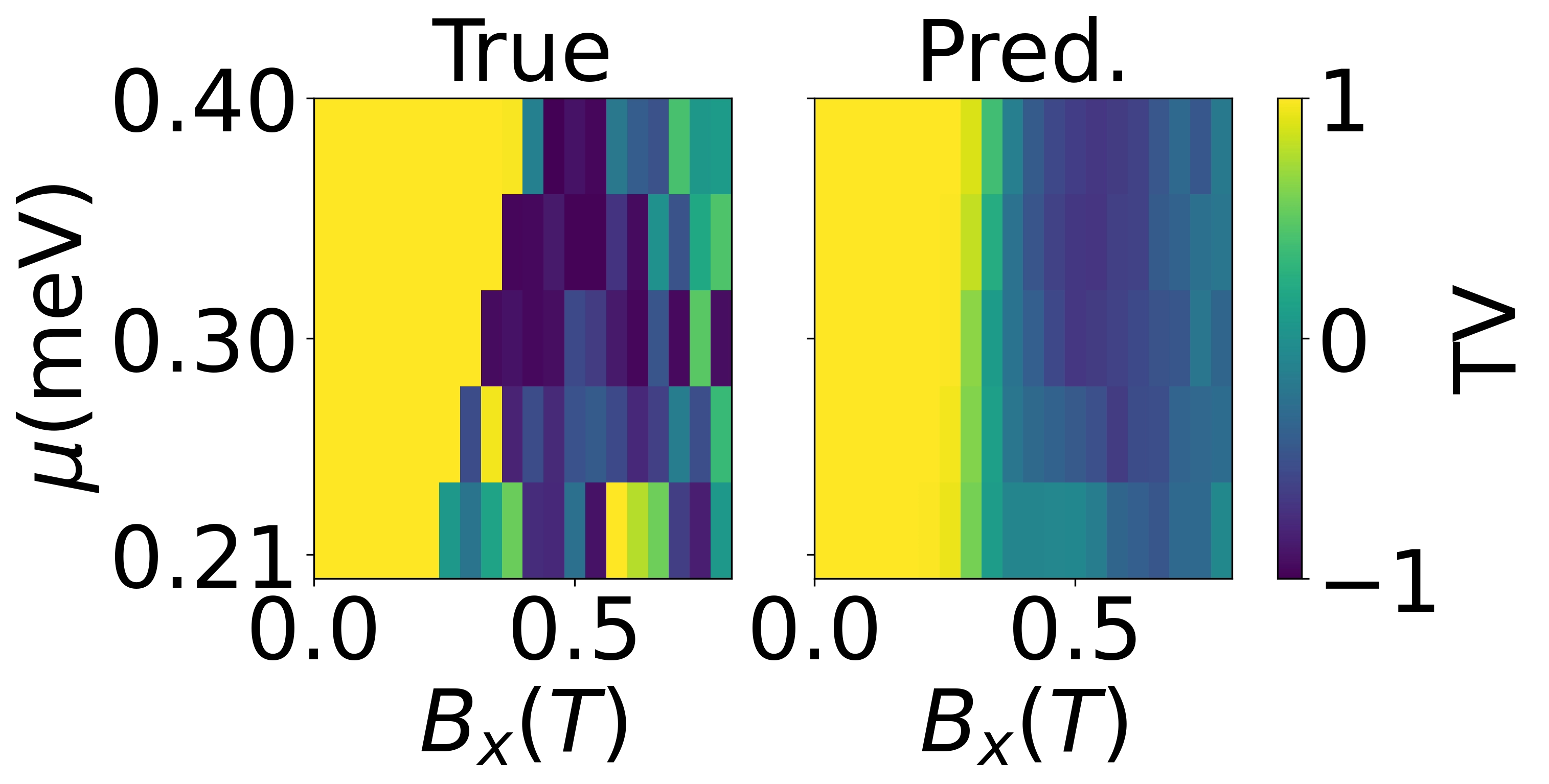
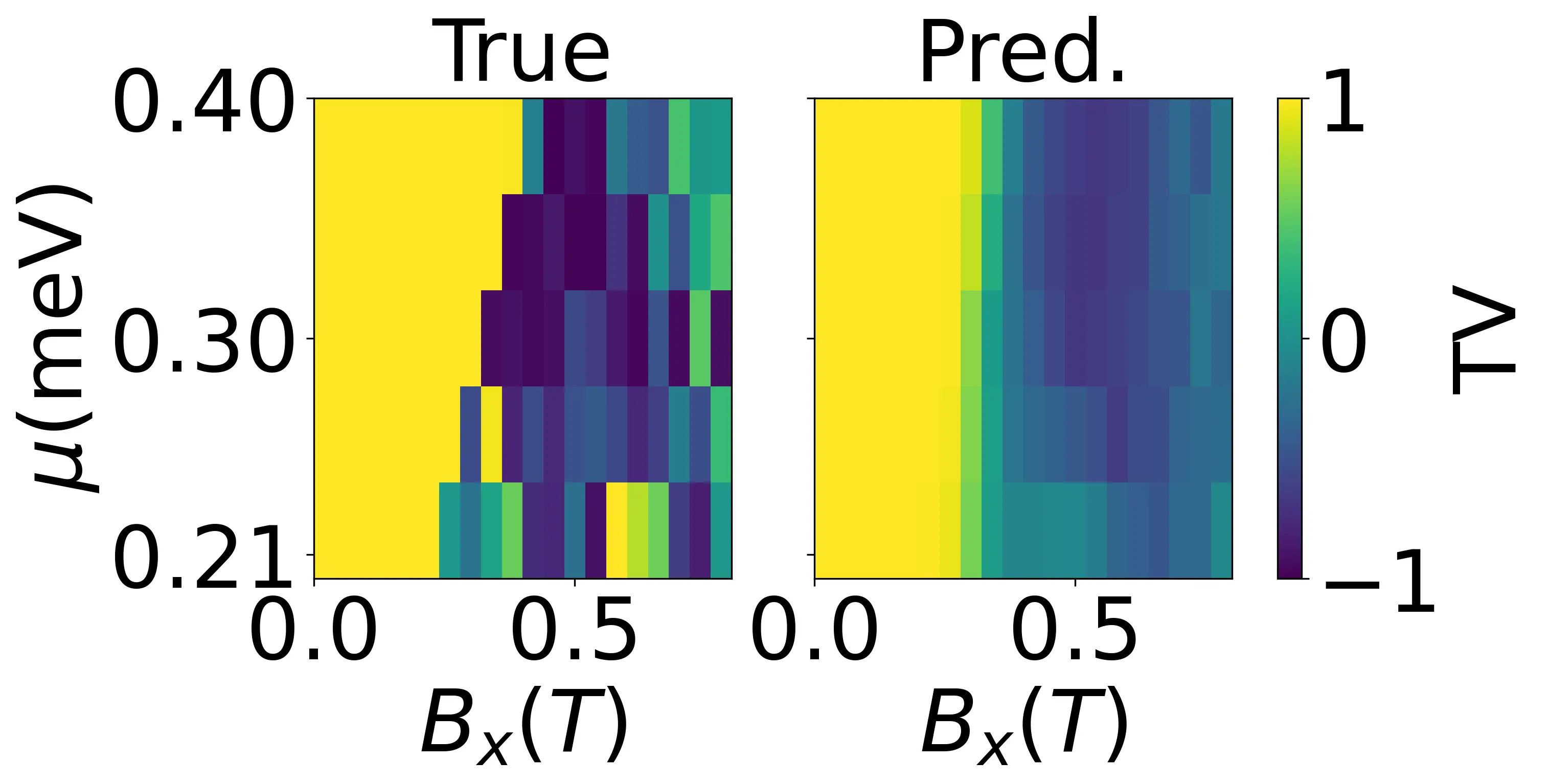
Identifying Majorana zero modes in semiconductor-superconductor nanowires requires ultra-low temperature transport measurements in dilution refrigerators, making device screening slow and resource-intensive. Here, we investigate whether high-temperature conductance data can be used to infer low-temperature Majorana nanowire properties before committing devices to dilution-refrigerator characterization. We generate paired high- and low-temperature conductance simulations for disordered Majorana nanowires and train neural networks to perform two related tasks. First, we use a Shifted Window U-Net Transformer diffusion-inspired architecture to reconstruct low-temperature conductance from thermally broadened high-temperature measurements, achieving high-fidelity recovery with for local conductance and for nonlocal conductance. Second, we train a Video Vision Transformer-based network to predict the low-temperature topological visibility directly from high-temperature conductance, obtaining . These results demonstrate that machine-learning models can recover and infer low-temperature Majorana features from experimentally easier high-temperature data, providing a practical route for rejecting poor devices early thus avoiding slow and resource-intensive dilution refrigeration for non-promising devices. This high-temperature screening approach could substantially accelerate the experimental feedback loop for Majorana nanowire device development.
← Back to publications